



City Profile
Tuscaloosa, Alabama
USA · Comprehensive city data and intelligence
Tuscaloosa, Alabama, often referred to as 'The Druid City' due to its historic water oaks, is a vibrant city situated on the Black Warrior River in west-central Alabama. It serves as the county seat of Tuscaloosa County and is a principal city within its metropolitan statistical area. The city is perhaps best known as the home of the University of Alabama, which significantly influences its culture, economy, and demographic makeup, making it a quintessential college town. People are drawn to Tuscaloosa for its blend of Southern charm, educational opportunities, and a growing job market, particularly in sectors like manufacturing and healthcare. The city has seen consistent population growth, reflecting its appeal as a place to live and work.
Alabama, located in the southeastern United States, is characterized by its Southern charm, rich history, and diverse natural beauty, ranging from the Appalachian foothills to Gulf Coast beaches. The state's economy has diversified beyond its agricultural roots, with major industries now including automotive manufacturing, aerospace, healthcare, banking, and steel production. Living in Alabama generally offers a low cost of living, particularly for housing, which is significantly below the national average. The climate is humid subtropical, featuring hot, humid summers and mild winters with ample sunshine for much of the year, supporting an outdoor-oriented lifestyle.
How this 59/100 was calculated five components, with every reading behind them
| Component | Readings used | Points | Weight | Contributes |
|---|---|---|---|---|
| Safety | Safety score: 48 / 100 | 48.0 | 30% | 14.4 |
| Affordability | Cost of living index (100 = national baseline): 87.0 | 60.0 | 25% | 15.0 |
| Economy & jobs | Median household income: $51,464 Income needed to live here: $39,720 Unemployment rate: 4.2% | 67.2 | 20% | 13.4 |
| Growth | Population growth rate: 1.89% Job growth rate: 1.64% | 62.5 | 15% | 9.4 |
| Business climate assessment | Business climate assessment: 70 / 100 | 70.0 | 10% | 7.0 |
| Overall score | 59.2 | |||
Provenance.
These figures were produced by the research pass recorded as
Gemini (Tier 3 (deep think), q=79), last refreshed
23 July 2026.
They are researched estimates drawn from public sources, not a licensed data feed.
Each component is scored against fixed published endpoints, so this number is comparable with any other city and does not move as the dataset grows. Scoring framework 2026.10 — full methodology, weights and accepted ranges.

Featured Events
Happening in Tuscaloosa
Featured and sponsored events in Tuscaloosa.
Local Directory
Businesses in Tuscaloosa
Featured local businesses in Tuscaloosa.

Performance
Quality Scores
Expenses
Cost of Living
The cost of living in Tuscaloosa is notably more affordable than the national average, standing approximately 11% to 13.1% lower. This affordability is a significant draw for residents and contributes to the city's overall appeal. Housing expenses, in particular, are considerably lower, estimated to be around 26% less expensive than the national average. While housing costs are a major factor in the city's affordability, utility prices tend to be slightly higher, about 11% to 13.2% above the national average. Transportation costs, including gas prices and public transit, are generally lower, further contributing to the city's cost-effectiveness.
Income
Salary Insights
Tuscaloosa's economy is robust and diverse, anchored by major employers and a stable job market. The city experienced an employment growth rate of 1.64% from 2023 to 2024, indicating a healthy expansion in job opportunities. Key industries driving the local economy include Manufacturing, Educational Services, and Health Care & Social Assistance, which collectively employ a significant portion of the workforce. Major employers such as the University of Alabama, Mercedes-Benz U.S. International, DCH Health System, Nucor Steel, and Peco Foods provide steady employment across various sectors. The city has also been recognized for its small business growth, with Tuscaloosa ranking among the nation's top cities for new business creation from May 2024 to May 2025, reflecting a positive entrepreneurial climate.
The average salary in Tuscaloosa is $54,163 per year. You would need approximately $39,720 to live comfortably.
Employment
Top Industries
Weather
Climate
Mobility
Transport
Getting around Tuscaloosa primarily relies on personal vehicles, as indicated by a high car dependency where a significant majority of workers drive alone to work. The average one-way commute time in Tuscaloosa is approximately 19.6 minutes, which is shorter than the national average. While the city's walkability score is relatively low at 33, suggesting that many errands require a car, efforts are being made to improve pedestrian and cycling infrastructure. Public transportation options exist, but the transit score is not widely reported, implying a less extensive system compared to larger metropolitan areas.

At a Glance
Pros & Cons
Advantages
Drawbacks
Head to Head
Compare Tuscaloosa
Community Q&A
Questions about Tuscaloosa
What people ask about living in and moving to Tuscaloosa, Alabama.
FAQ
Frequently Asked Questions
Businesses for Sale in Tuscaloosa
Explore active acquisition & franchise opportunities .
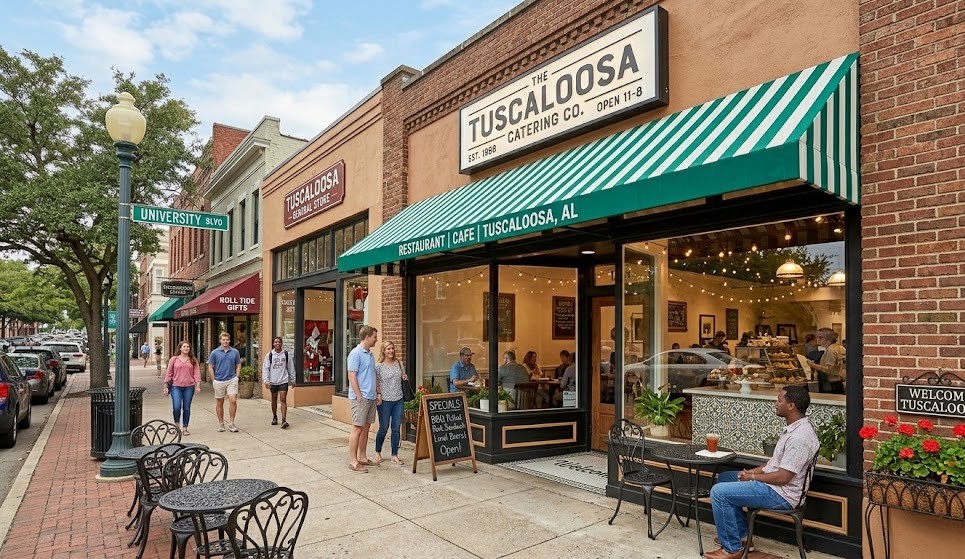
Senior Care in Tuscaloosa
4 assisted living, nursing & memory care facilities in Tuscaloosa.



City Guide
Explore Tuscaloosa
Free Quotes
Get quotes from local pros in Tuscaloosa
Tell us what you need and we’ll pass it to companies that serve your area. It’s free, and there’s no obligation.

Compare Tuscaloosa with any city
See how it stacks up on cost, income, and quality of life.
Start Comparing