Data-Driven Rankings
City Rankings
Discover top cities ranked by livability, business climate, affordability, and growth potential.

Our master municipal index evaluates the total package of urban stability. To secure a high place, a city cannot simply excel in one vacuum; it must balance economic resilience with housing accessibility and infrastructure health. This multi-variate analysis normalizes datasets across thousands of data points to highlight the most balanced environments in USA.
614 cities ranked · ranked by overall





Analysis
Key Takeaways & Market Trends
What the current index actually tells us about where balanced opportunity is concentrating.
Where the index currently points
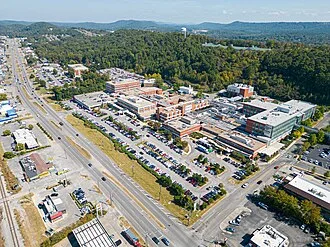
The highest-scoring cities right now are Newcastle, WY, Madison, AL and Owasso, OK. What they share is balance rather than a single standout number: each pairs incomes that are reachable against local housing with infrastructure and safety scores that do not drag the composite down.
Suburban Outperformance
Smaller, high-infrastructure municipalities frequently outrank massive metropolitan hubs. This structural divergence occurs because smaller municipal budgets can allocate higher per-capita spending toward public safety, local healthcare accessibility, and public park infrastructure.
The Affordability Premium
A recurring pattern across the top quartile: purchasing power, not headline salary, decides the ranking. Cities that pair median incomes within reach of local home values consistently outscore higher-wage coastal markets where housing costs erode real disposable income.

Methodology
The Urblytica Scoring Framework
One composite score, 0–100, from five components. Each component is mapped onto a common higher-is-better scale against fixed published endpoints, so any two cities are directly comparable and a city's number does not drift as the dataset grows.
Safety
How safe the city is to live in, relative to every other city in the dataset. Published on a 0-100 scale where higher is safer, so it enters the score unchanged.
Affordability
What day-to-day life costs, across housing, groceries, utilities, transport and healthcare. Inverted onto a higher-is-better scale: an index of 55 scores 100, an index of 135 scores 0, linear in between and clamped at both ends.
Economy & jobs
Whether local pay actually covers local costs, and how easy it is to find work. Two halves, averaged. Income adequacy is median household income divided by the income needed to live there: a ratio of 0.8 scores 0 and 1.6 scores 100. Unemployment is inverted, so 10% scores 0 and 2% scores 100.
Growth
Whether the city is gaining people and jobs or losing them. Averaged across whichever of the two is available. Population growth of -1%/yr scores 0 and 3%/yr scores 100; job growth of -1%/yr scores 0 and 4%/yr scores 100.
Business climate
How straightforward it is to start and run a business locally. Used on its published 0-100 scale. This is the research model's assessment of local conditions rather than a measurement, which is why it carries the smallest weight.
Where the figures come from: Urblytica's city figures are researched estimates, produced by an AI pipeline that searches the live web per city and extracts the numbers from public sources — statistical-office releases, labour-market reporting, published crime statistics, rental and housing indices. They are not a licensed data feed, and readings outside a plausible range are discarded rather than scored. Every city page shows its own component-by-component working, the research pass and quality score behind its figures, and the date they were last refreshed. Read the full methodology →
Questions