



City Profile
Ottumwa, Iowa
USA · Comprehensive city data and intelligence
Ottumwa, Iowa, situated along the scenic Des Moines River in Wapello County, boasts a rich history deeply rooted in meatpacking, railroading, and manufacturing. Founded in the mid-19th century, the city grew into a major industrial hub, famously nicknamed the 'Video Game Capital of the World' in the 1980s for its arcade gaming culture. Today, Ottumwa serves as a regional center for retail, healthcare, and employment in southeast Iowa, attracting residents with its charming historic downtown and welcoming Midwestern community vibe. People frequently move to Ottumwa for its exceptionally low cost of living, peaceful neighborhoods, and ample economic opportunities relative to housing expenses.
Iowa, located in the Midwest, is characterized by its expansive farmlands and a generally relaxed, community-focused lifestyle. The state's economy is diverse, with major industries including advanced manufacturing, biosciences, finance and insurance, and its foundational agricultural sector, which leads in corn, soybean, ethanol, and pork production. Living in Iowa is notably affordable, with the cost of living, particularly housing, being significantly lower than the national average. The climate is humid continental, featuring hot, humid summers and cold winters, with seasonal precipitation and susceptibility to various natural disasters like snowstorms, floods, and tornadoes.
How this 63/100 was calculated five components, with every reading behind them
| Component | Readings used | Points | Weight | Contributes |
|---|---|---|---|---|
| Safety | Safety score: 65 / 100 | 65.0 | 30% | 19.5 |
| Affordability | Cost of living index (100 = national baseline): 82.0 | 66.3 | 25% | 16.6 |
| Economy & jobs | Median household income: $53,500 Income needed to live here: $42,000 Unemployment rate: 3.8% | 68.4 | 20% | 13.7 |
| Growth | Population growth rate: 0.4% Job growth rate: 1.5% | 42.5 | 15% | 6.4 |
| Business climate assessment | Business climate assessment: 67 / 100 | 67.0 | 10% | 6.7 |
| Overall score | 62.8 | |||
Provenance.
These figures were produced by the research pass recorded as
Tier 1 (fast) (q=52, partial — below threshold), last refreshed
16 October 2026.
They are researched estimates drawn from public sources, not a licensed data feed.
Each component is scored against fixed published endpoints, so this number is comparable with any other city and does not move as the dataset grows. Scoring framework 2026.10 — full methodology, weights and accepted ranges.

Featured Events
Happening in Ottumwa
Featured and sponsored events in Ottumwa.
Local Directory
Businesses in Ottumwa
Featured local businesses in Ottumwa.

Performance
Quality Scores
Expenses
Cost of Living
The cost of living in Ottumwa is significantly lower than the national average, making it an attractive destination for budget-conscious families, first-time homebuyers, and retirees. Housing costs, in particular, remain well below the national median, allowing residents to purchase spacious properties for a fraction of what they would cost in larger metropolitan areas. Everyday expenses such as groceries, utilities, and local services also track below national norms, leaving residents with more disposable income. While certain specialized goods and services may require travel to larger hubs like Des Moines, the day-to-day cost structure heavily favors affordability.
Utility costs fluctuate moderately with the changing seasons, driven by warm summers and cold winters, but overall energy expenses remain manageable. Property taxes in Iowa can be a factor, yet the low initial purchase price of homes in Ottumwa largely offsets these local tax burdens. Transportation expenses are generally low due to short average commute times and minimal traffic congestion, reducing fuel and maintenance costs. Overall, Ottumwa provides an economical lifestyle without sacrificing essential modern amenities.
Income
Salary Insights
Ottumwa features a resilient local economy anchored by manufacturing, healthcare, education, and retail trade. Major employers such as John Deere, JBS USA, and Ottumwa Regional Health Center provide a steady foundation of stable blue-collar and professional jobs for the region. The city acts as an employment magnet for surrounding rural counties, drawing a daily workforce into its commercial and industrial districts. While traditional industries still dominate, community leaders have actively pursued workforce development initiatives and support for small businesses to diversify the local economic base.
The remote work scene in Ottumwa is growing slowly, supported by expanding broadband internet infrastructure throughout Wapello County. Professionals seeking a quiet environment with low overhead costs increasingly find Ottumwa appealing for remote employment while earning wages from companies based in larger metros. Workforce training programs at Indian Hills Community College help align local skill sets with emerging employer demands. Consequently, the local job market maintains steady participation rates and offers dependable opportunities for skilled laborers and healthcare professionals.
The average salary in Ottumwa is $48,000 per year. You would need approximately $42,000 to live comfortably.
Employment
Top Industries
Weather
Climate
Mobility
Transport
Getting around Ottumwa is primarily centered on automobile travel, with an efficient street grid and minimal traffic congestion ensuring fast commutes. Public transportation is provided by the Ottumwa Transit Authority, which operates fixed-bus routes connecting major residential, commercial, and medical hubs. Walkability varies by neighborhood, with the downtown commercial district offering pedestrian-friendly sidewalks and retail access, while suburban areas are more car-dependent. Bike paths and trails are continually being expanded to support alternative transit and recreation.
Commute times in Ottumwa are exceptionally short, averaging well under twenty minutes, which significantly reduces daily travel fatigue. Major regional highways, including US-63 and US-34, intersect near the city, providing smooth vehicular connections to Des Moines, Iowa City, and neighboring states. While rail freight is active through the city, passenger rail access requires travel to nearby regional stations. Overall, the local transportation network is optimized for quick, stress-free driving and basic public transit utility.

At a Glance
Pros & Cons
Advantages
Drawbacks
Head to Head
Compare Ottumwa
Community Q&A
Questions about Ottumwa
What people ask about living in and moving to Ottumwa, Iowa.
FAQ
Frequently Asked Questions
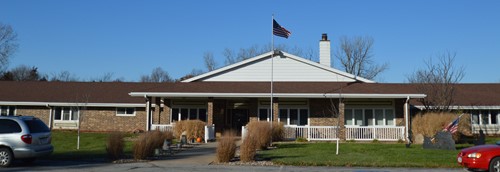
Senior Care in Ottumwa
12 assisted living, nursing & memory care facilities in Ottumwa.
 Assisted Living
Ridgewood Specialty Care
Ottumwa, IA
Good Samaritan Society - Timber Ridge
Ottumwa, IA
Good Samaritan Society - Hospice
Ottumwa, IA
Good Samaritan Society - Ottumwa
Ottumwa, IA
Good Samaritan Society - Ottumwa
Ottumwa, IA
Good Samaritan Society Home Care And Hospice
Ottumwa, IA
Hospice Inc Serving Davis & Wapello Counties
Ottumwa, IA
Pennsylvania Place Memory Care
Ottumwa, IA
Pennsylvania Place
Ottumwa, IA
Vista Woods Care Center
Ottumwa, IA
Prairie Hills at Ottumwa
Ottumwa, IA
Iowa Home Care, L L C
Ottumwa, IA
Free Quotes
Get quotes from local pros in Ottumwa
Tell us what you need and we’ll pass it to companies that serve your area. It’s free, and there’s no obligation.

Compare Ottumwa with any city
See how it stacks up on cost, income, and quality of life.
Start Comparing